What is the main difference between the Cactus Corridor and Paradise Valley?
The Cactus Corridor is a Scottsdale estate-lot neighborhood without a formal town government, while Paradise Valley is a separate incorporated town with its own zoning code built specifically around large-lot, low-density living. Both offer estate-style properties on large parcels, but Paradise Valley's town-wide zoning creates a more consistently low-density feel across its entire boundary.
How do prices compare between the Cactus Corridor and Paradise Valley?
| Cactus Corridor | Paradise Valley | |
|---|---|---|
| Entry point | $1.5M (needs updating) | $2M (needs renovation) |
| Updated custom home | $2.2M–$4M | $3M–$6M |
| Signature / trophy estate | $4M–$10M+ | $12M–$30M+ |
| Recent median | ~$2.0M | $3.4M–$4.4M |
The Cactus Corridor generally offers a lower entry price for a large, private lot, while Paradise Valley's top tier extends considerably higher, with trophy estates regularly selling above $20 million.
How do lot sizes and privacy compare?
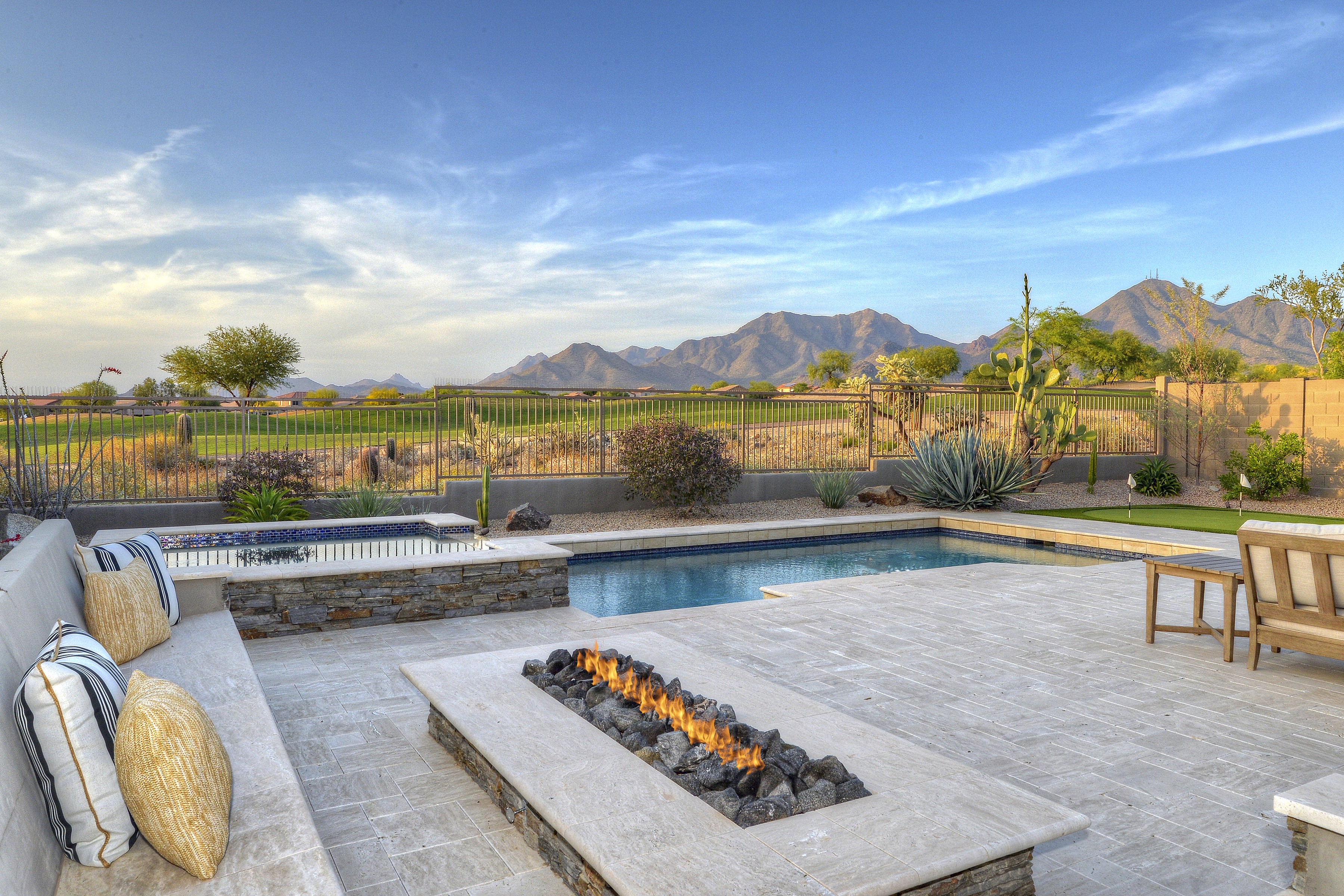
Both areas feature large lots, typically one to five acres, with mature landscaping and custom architecture. The Cactus Corridor achieves privacy largely through mature trees and irrigated lots with no HOA in many pockets, while Paradise Valley achieves privacy through town-wide zoning and setback requirements, with only a handful of guard-gated subdivisions such as Cheney Estates and Finisterre.
How does location and access compare?
The Cactus Corridor sits within Scottsdale, close to the Shops at Gainey Village and within a short drive of McDowell Sonoran Preserve trailheads. Paradise Valley sits between Scottsdale and Phoenix, minutes from Scottsdale Fashion Square, Old Town Scottsdale, the Biltmore area, and Sky Harbor Airport, and is framed directly by Camelback and Mummy Mountain.
Which area has more resort and dining amenities nearby?
Paradise Valley has more resort density directly within its boundaries, including The Phoenician, Sanctuary Camelback Mountain, Mountain Shadows, the Omni Montelucia, and the JW Marriott Camelback Inn, along with dining destinations like El Chorro. The Cactus Corridor relies more on nearby Gainey Village and North Scottsdale for dining and retail rather than on-site resorts.
Which area is better for buyers who want new construction?
Paradise Valley generally has more capacity for ground-up new construction, since its zoning is built specifically around large, low-density residential lots, and new custom estates in the $6 million to $12 million range are common. The Cactus Corridor also supports new construction and renovation, particularly on older one- to five-acre parcels, but inventory of buildable or teardown lots is more limited than in Paradise Valley.
Buyers planning to build should budget more time for design and permitting in Paradise Valley, where architectural review and setback requirements are applied town-wide, compared with the Cactus Corridor, where many parcels carry no HOA architectural review at all.
How should a buyer choose between the two?
Buyers who want the highest concentration of resorts, golf, and dining within walking or short driving distance, along with the widest range of price points from $2 million to $30 million-plus, tend to gravitate toward Paradise Valley. Buyers who want a lower entry price into a large, private, custom-built estate lot, without paying for on-site resort density, often find better value in the Cactus Corridor.
Because both markets are adjacent, many buyers tour homes in both areas during the same search before deciding, since lot character and price can vary as much within each area as between them.