
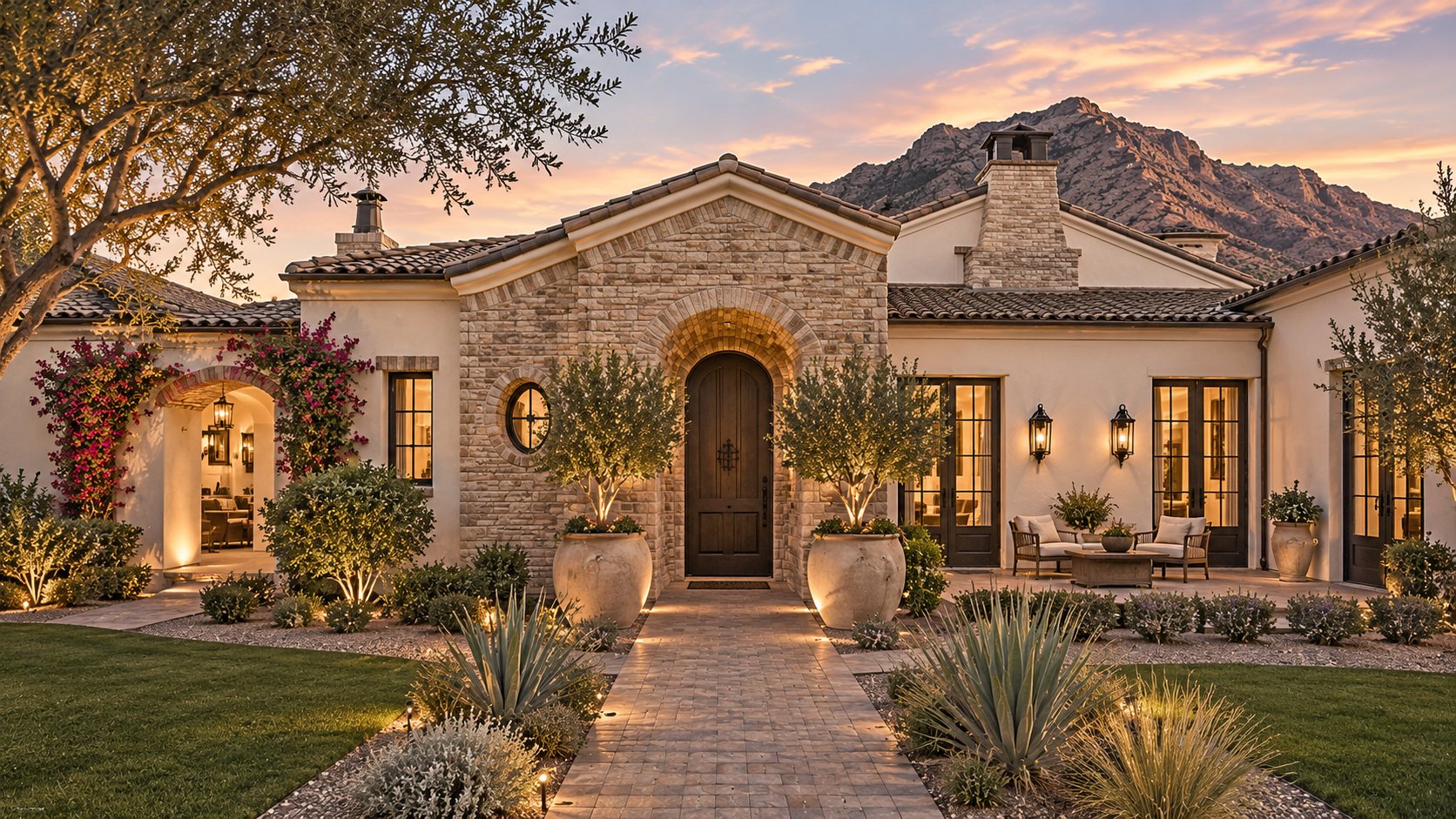
What does building a custom luxury home in Arizona involve?
A custom home starts with land: a vacant lot or an older home you plan to replace. From there you hire an architect, choose a licensed residential builder, take the plans through city or town review for permits, and sign a construction contract. Each step has Arizona rules worth knowing before you commit money.
Custom building is a different path from buying a finished home, and I cover the general trade-offs in New Construction vs. Resale Luxury Homes in Scottsdale. This guide focuses on the lot, the builder, the contract, and the protections Arizona law gives you along the way.
What should you check before buying a lot to build on?
Start with the land's rules and water. If the lot is in a subdivision, the Arizona Department of Real Estate says to see the public report before signing. Buyers of raw land in a subdivision get seven calendar days to rescind without cause, plus six months to inspect the land.
Ask how the lot gets water. In the Phoenix area, the Arizona Department of Water Resources requires subdivisions to show a 100-year assured water supply, and lots outside a city's service area may depend on a private well. For a teardown in an established area, confirm zoning, setbacks, height limits, and any hillside rules before you close. Laura Jorden pulls those details early so you know what you can actually build.
How do Scottsdale's desert land rules affect a custom lot?
Much of north and east Scottsdale falls under the Environmentally Sensitive Lands Overlay, which covers about 134 square miles north and east of the Central Arizona Project canal. It requires part of each property to stay as natural area open space, and it protects washes, ridges, peaks, and boulder outcroppings. That shapes where the house can sit.
The share of a lot that must stay natural varies with its landform and slope, so two lots of the same size can offer very different buildable areas. Before you buy, have your architect or civil engineer review the lot against the overlay and the city's native plant rules. It's the simplest way to avoid paying for land you can't use.
What license should your custom builder have?
Check it with the Arizona Registrar of Contractors. The B General Residential license allows a contractor to "construct and repair all or any part of a residential structure," and the KB-1 dual license includes that residential scope. Electrical, plumbing, HVAC, pools, spas, and wells must be subcontracted to licensed specialty trades.
The license also matters if something goes wrong. The Registrar's Residential Contractors' Recovery Fund can pay up to $30,000 per residence, and $200,000 per contractor license, when a licensed residential contractor's work is poor or unfinished. You must occupy or plan to occupy the home as your primary residence, and payment isn't guaranteed.
What must an Arizona construction contract include?
Under A.R.S. 32-1158, a residential contract over $1,000 must state the contractor's name, address, and license number, the job address, the work, the total price including taxes, any deposit and progress payments, the estimated completion date, and your right to file a complaint with the Registrar. You're entitled to copies and receipts.
The law sets the minimum. For a custom home, also settle whether the price is fixed or cost-plus, what each allowance covers, how change orders are priced and approved in writing, and what happens if the schedule slips. Have a real estate attorney review the contract before you sign.
How are mechanics' liens handled when you build a custom home?
Arizona gives owner-occupants strong protection. Under A.R.S. 33-1002, subcontractors and suppliers generally can't record a lien against your home unless they signed a written contract directly with you. To qualify, you must hold recorded title before construction starts and intend to live there at least 30 days in the year after completion.
The statute also says any waiver of that protection is void. If the home is a second home or investment property, or you don't meet those conditions, ask your builder for lien waivers from subcontractors and suppliers with each draw, and talk with your attorney and lender about how payments are released.
What protections do you have after the home is finished?
Start with your builder's written warranty, then Arizona law. Under A.R.S. 12-552, contract and implied-warranty claims against a builder generally must be brought within eight years after substantial completion, or up to nine years for a defect first discovered in the eighth year. Express written warranties follow their own terms.
Keep your plans, permits, inspection reports, warranty booklet, and change orders together. An independent inspector at key stages, such as before drywall, adds a second set of eyes beyond the city's code inspections and makes problems far easier to fix while the walls are still open.
Is building custom worth it compared with buying a finished home?
It depends on how much you value getting exactly the home, site, and views you want, and how much time you can give the process. Building custom means a longer timeline and more decisions, but in built-out areas like Paradise Valley and the Cactus Corridor, a lot or teardown can be the only way to get the home you envision.
Laura Jorden helps clients compare buildable lots and teardowns against finished homes, using recent sales so the decision rests on data. If you're thinking about building in Scottsdale, Paradise Valley, or the East Valley, call me at 480-734-0870.
This article is general information, not legal advice. Laws, city rules, and water requirements change; confirm details with your attorney, architect, builder, and the agencies linked above.